

Today we step into the silicon-based world to take back what once belonged to us.
When we look from a broader view, it becomes clear that silicon technologies are not purely human inventions. They are reflections of nature’s own designs. Throughout history, engineers and designers have looked to living systems for inspiration. The anatomy of birds, for example, guided the evolution of flight. And that is just one of thousands of examples.
Our topic today is biosensors. To start, think of the sensors you encounter in daily life. What comes to mind first? Automatic doors? Parking systems? Smoke alarms? Why not think first about your own body?
We do not need to go far to find the connection. Think about the traditional five senses that shape how we experience the world. Our eyes detect light, our ears catch sound waves, and our nose recognizes chemicals in the air. The tongue identifies the chemical makeup of food, while the skin feels pressure and temperature. Every moment of perception begins with sensing, and our bodies have evolved a sophisticated network for it.
Now, let’s look a bit deeper.
Cells follow the same principle but on a much smaller scale. They use an extraordinary variety of sensors to detect signals inside and outside the body, from chemicals and light to mechanical forces. Some sensors specialize in recognizing specific molecules such as calcium ions that regulate vital cellular functions. Others respond to physical forces; for example, integrins are proteins that sense mechanical changes and help cells attach or move. Certain sensors monitor the structure and stability of cellular membranes, ensuring that internal balance is maintained. There are also highly specialized ones that respond to temperature, light, nearby cells, and even the cell’s own metabolic state.
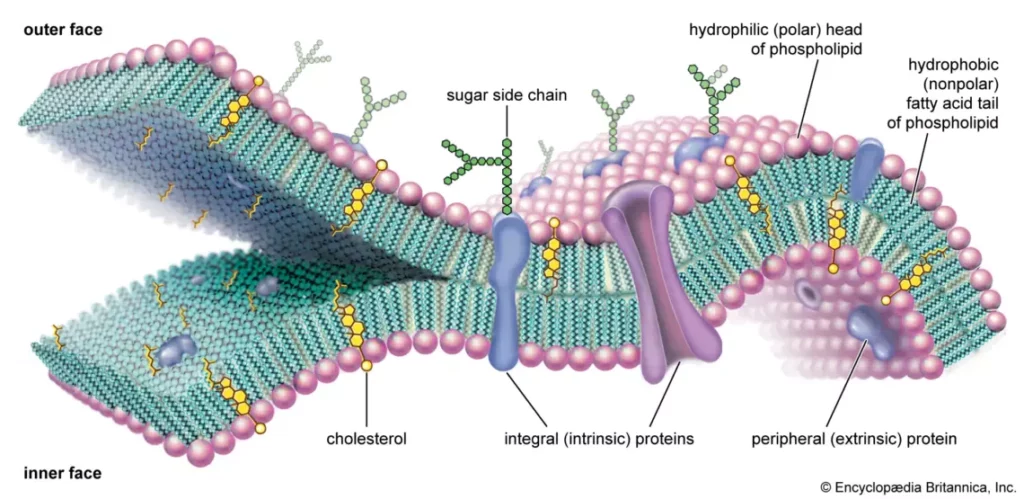
Nature has been perfecting these systems for billions of years. We are now building silicon-based versions to follow in its path.
Most of us have already encountered biosensors without realizing it. Every time a diabetic checks their blood sugar with a small handheld meter, or when a smartwatch tracks heart rate and oxygen, a biosensor is at work. These devices translate subtle biological signals into actionable data, turning the invisible chemistry of life into numbers we can act on. But the story of biosensors goes far beyond consumer wearables. They are reshaping medicine and accelerating research in laboratories, creating new opportunities for healthcare innovation and biotech investment.
Today we enter that space again, the meeting point of biology and technology.
Welcome to the world of biosensors!
Scientific Perspective
Biosensors detect a specific substance, like a molecule or virus, and turn that detection into an electrical signal we can read. This makes them incredibly useful for medicine. At their heart, biosensors are built on two main parts: a biological recognition element, called a bioreceptor, and a transducer, which converts the biological reaction into a measurable signal.
The bioreceptor is the part of the sensor that actually recognizes the target substance, also known as the analyte. It can be an enzyme, antibody, nucleic acid, cell, or even a piece of tissue. When the analyte binds to the bioreceptor, a change occurs in the system. This change could be a shift in heat, pH, mass, light, or electrical charge. Some bioreceptors, called catalytic receptors, catalytic receptors, are used for continuous monitoring, such as tracking blood sugar levels. Others, called non-catalytic receptors, detect substances that occur in very small amounts and are usually single-use, like antibodies in a pregnancy test. The bioreceptor must be highly specific and stable, ensuring that it accurately senses only the intended analyte.
The transducer is the part that translates the biological event into a measurable signal. Essentially, it converts one form of energy into another. When the bioreceptor interacts with the analyte, a small physical or chemical change occurs. The transducer detects this change and turns it into an electrical signal, such as a shift in voltage, current, or frequency. For instance, in a glucose biosensor, the enzyme glucose oxidase reacts with glucose to produce gluconic acid. This changes the pH of the solution, and the transducer detects the shift, converting it into a readable electrical signal. Transducers can work using optical, electrochemical or piezoelectric techniques, depending on the design and intended application.
Once the transducer generates a signal, it is often weak and mixed with background noise. Electronics inside the biosensor amplify and filter the signal, making it easier to read. The data is then converted into a digital format, processed by a microprocessor, and finally displayed on a screen or sent to a smart device. This process ensures that the biological event, invisible to the naked eye, can be measured and interpreted in real time. Modern biosensors can even transmit data to smartphones or cloud systems, allowing continuous monitoring of health or environmental conditions.
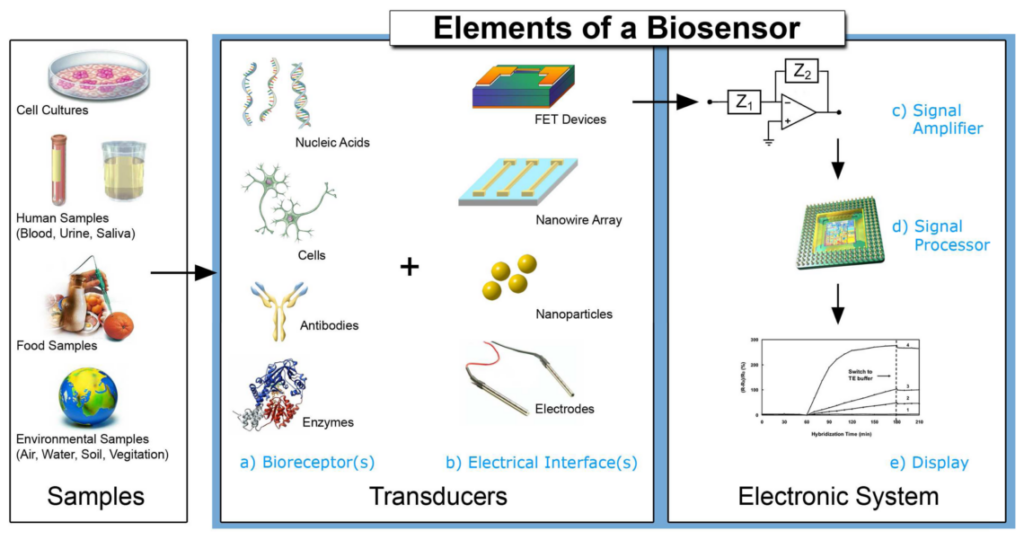
The working mechanism of a biosensor can be understood as a three-step process. First, the bioreceptor recognizes and binds to the analyte, creating the biological event (for instance, an antibody in the sensor might capture a virus protein in a sample). Second, the transducer detects the resulting physical or chemical change and converts it into an electrical signal (for example, an electrode might experience a change in voltage, or a small optical chip might change how it reflects light). Third, the electronics process, amplify and display the result in a readable form. All of this can happen in a matter of seconds or minutes. While the details may differ slightly depending on the type of biosensor, this sequence of recognition, transduction, and signal processing is the same across most devices.
Biosensors differ from other analytical tools. A bioanalytical system usually requires extra steps, such as adding reagents, while a single-use biosensor is disposable and measures only once. True biosensors combine a bioreceptor and a transducer to continuously provide real-time measurements. The first biosensor was an enzyme electrode for measuring glucose, which later evolved into the blood glucose meters used by millions of diabetics today. Since then, biosensors have expanded into detecting viruses, toxins, pollutants, and even biomarkers for personalized medicine.
In short, biosensors bring the precision of nature into human technology. They take an invisible biological interaction and translate it into something we can measure, understand, and act on. Biosensors are quietly transforming our ability to see and respond to the world at a microscopic scale.
Today’s News & Future Perspective
Biosensors have become one of the most dynamic areas of modern technology. The global biosensors market was about $30 billion in 2025 and is projected to reach nearly $55 billion by 2032, an indicator of high demand and research activity.
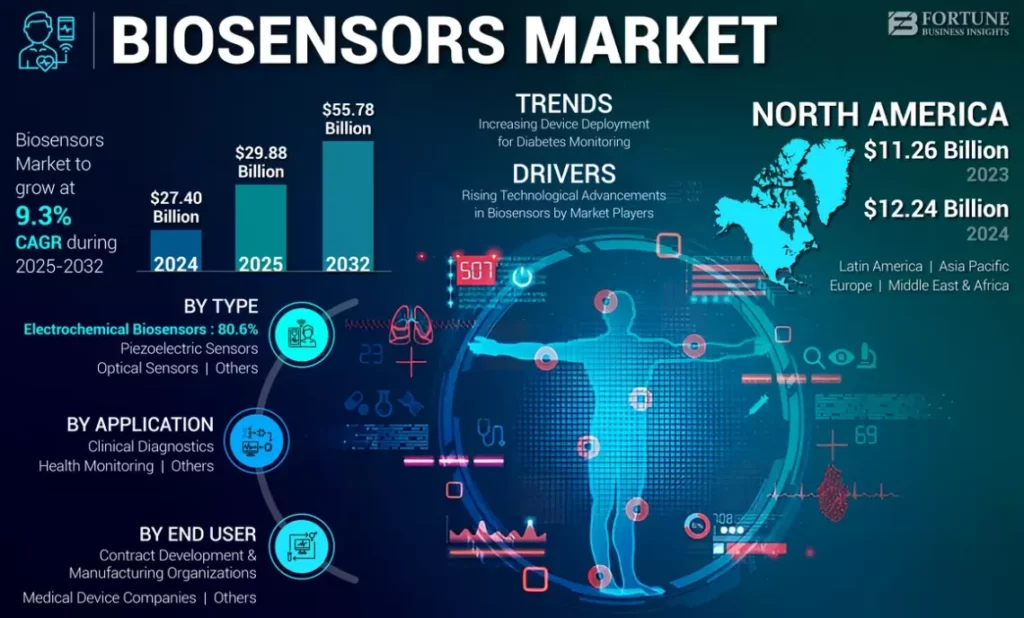
In medical science, biosensors are now essential tools. The best-known example is the glucose biosensor, used daily by millions of people with diabetes to monitor their blood sugar levels. These small, portable devices now represent almost 85 percent of the global biosensor market. Beyond glucose monitoring, researchers are exploring biosensors for detecting infectious diseases, cancers, and even heart conditions. For example, a promising technology under study uses biosensors to diagnose urinary tract infections and identify the responsible bacteria directly. This approach could reduce the need for time-consuming laboratory cultures and lead to faster, more accurate treatment.
Traditional methods to detect heart problems often require complex equipment and trained personnel. New biosensor systems are changing that reality. One of the most exciting examples can detect biological molecules, which helps doctors identify early signs of inflammation and heart failure. By measuring these signals in real time, biosensors can provide early warnings long before visible symptoms appear.
The list of potential medical applications keeps growing. Researchers are developing biosensors to detect cancer markers, monitor neurochemical activity in the brain, measure cardiac stress and even study dental disease. Each of these innovations brings medicine closer to becoming faster, more precise and personalized.
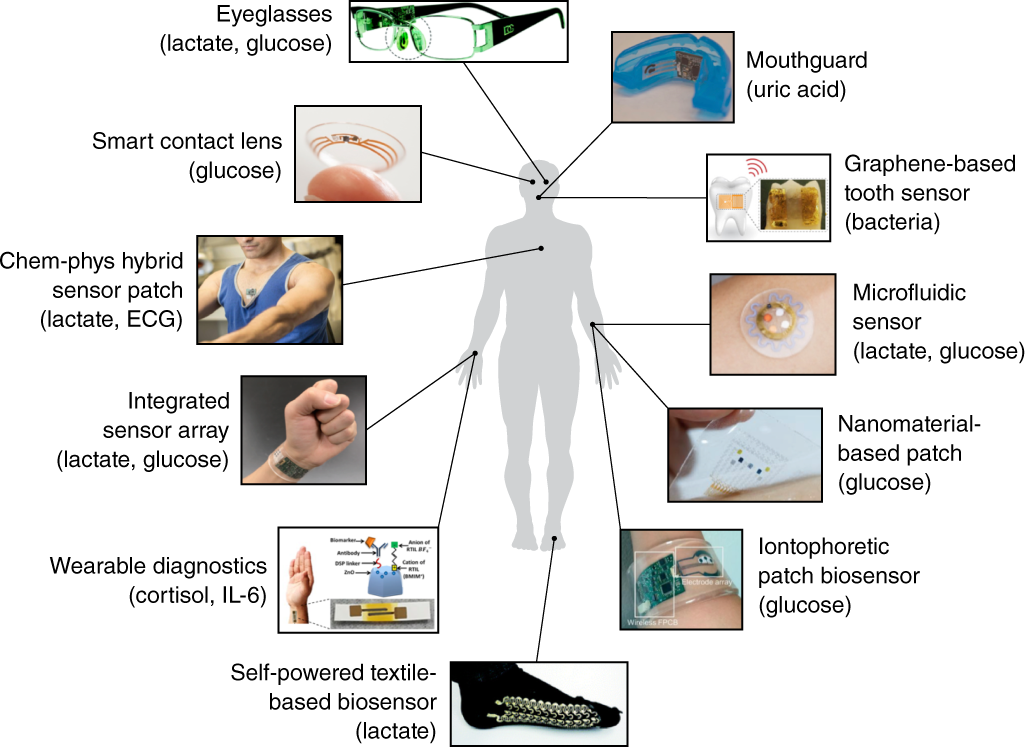
We are also entering a new era of personalized medicine, where biosensors and digital technologies work together. If you have read my article on the Digital Twins in healthcareyou already know how these ideas connect. Imagine a future where your Digital Twin (a virtual version of your body) works alongside your biosensors to monitor your health in real time. Your tablet could warn you when your body needs more water or when your stress levels get too high. It could even suggest lifestyle changes before you need medication. This combination of biosensors and Digital Twins can help reduce unnecessary medication use and prevent waste, allowing doctors to prescribe exactly the dosage your body needs.
This technology can also transform preventive medicine. Instead of waiting for symptoms to appear, biosensors can continuously track your body’s signals and detect early warning signs of disease. Combined with genetic analysis, they can reveal your personal health risks and guide you to take action before a condition starts. Imagine wearing or implanting biosensors designed according to your genetic profile, silently tracking your health and notifying you of the earliest changes. Doctors could intervene at the very first hint of a problem, long before traditional symptoms emerge.
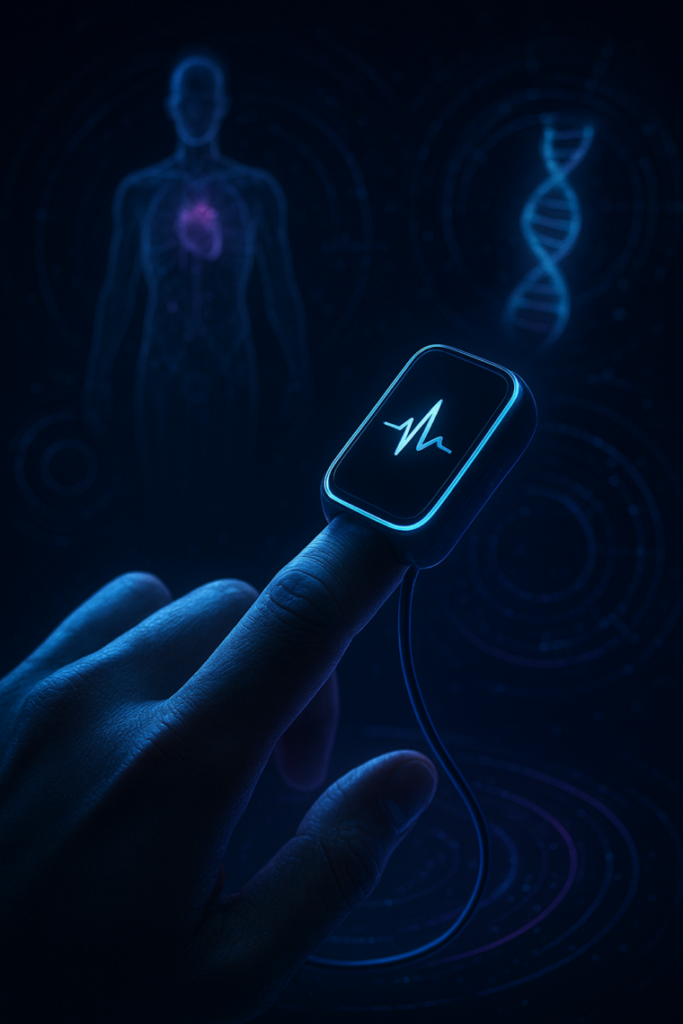
In clinical research, biosensors can make an equally profound impact. During drug trials, unexpected results sometimes appear, not because of the drug itself but because of unrelated factors that are difficult to detect. Continuous data from biosensors can help researchers follow every moment of a participant’s response, providing real-time insights. This means potential side effects can be identified earlier, and promising treatments can move forward faster and more safely.
The future of biosensors goes beyond innovation in materials or measurement. It is the beginning of a new partnership between human biology and digital intelligence. As these tools evolve, they will not only diagnose diseases but help prevent them, guiding us toward a healthier, more informed future.
Tune in to the future of Healthcare
Join our 20.000+ subscribers for the latest on Biotech investment & innovation


* What are you signing up for?
1 weekly mail with an article on surprising scientific advance and a (sometimes) witty article on innovation and investment.
1 weekly mail with updates on Capital Cell's investments in Healthcare startups.
This is not one of these "oh no, my email is all over the Internet" subscriptions. We will never, ever sell, send or cede your data to anyone else. Also, you can unsubscribe at any moment without us cheekly continue to send you mails - if you tell us to leave you alone, we will.