Today’s diagnostic gap
Every year, millions of people have pancreatic cysts that may progress to pancreatic cancer, one of the deadliest forms of cancer worldwide. While millions of people have pancreatic cysts that can progress to cancer, today’s diagnostic tools cannot accurately identify which patients are at risk.
- Massive undiagnosed market: an estimated 15% of the global population has pancreatic cysts, leaving 10 million pre-malignant cases completely undiagnosed.
- The cost of late detection: without early intervention, patients miss their window for lifesaving treatment. Once the disease advances, five-year survival rates plummet to just 11%.
- Failed diagnostic standards: current fine-needle procedures get it right only 33% of the time, usually because they fail to collect enough usable cellular material for a definitive analysis.
This diagnostic gap leaves clinicians guessing and patients exposed to undetected cancer risk
The world’s smallest brush!
Lucky Loop Medical is developing a patented medical device designed to improve the diagnosis of pancreatic cysts before they become life-threatening. The company’s technology, the Loop Brush, is an accessory used together with existing endoscopic fine needle aspiration (EUS-FNA) procedures. By collecting substantially more cellular material from pancreatic cysts than current methods, the device enables physicians to make more accurate diagnostic assessments and identify patients at risk earlier.
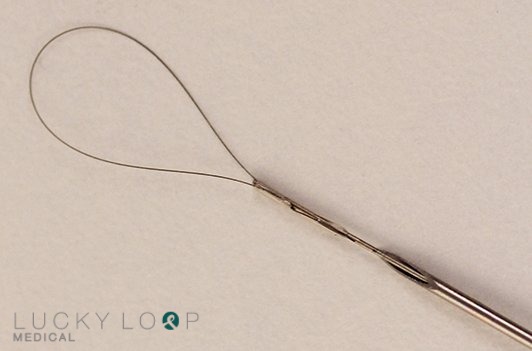
In preclinical randomized controlled testing published in the peer-reviewed journal iGIE, the device achieved diagnostic success rates exceeding 77%, more than doubling the performance of the current standard. The technology also demonstrated the ability to collect more than ten times as many cells as conventional methods and can be used on significantly smaller cysts, potentially expanding access to earlier diagnosis.
The potential impact extends beyond patient outcomes. Early detection dramatically improves survival prospects while reducing healthcare costs. Diagnosing pancreatic disease at an early stage can cost less than $1,000 per procedure, whereas advanced-stage treatment can exceed tens of thousands of dollars and may require chemotherapy costing approximately $27,000 per month. By helping physicians identify high-risk cysts before cancer develops, Lucky Loop Medical aims to improve survival rates, reduce treatment burden and lower healthcare expenditures, facilitating adoption of the Loop Brush.
Our achievements
The company is currently preparing for its first human clinical trial following successful preclinical studies, GMP manufacturing, completion of sterilization, biocompatibility, and quality testing. Regulatory pathways for both European CE marking and USA FDA 510(k) clearance have been defined in collaboration with specialized regulatory partners, creating a clear roadmap towards commercialization.
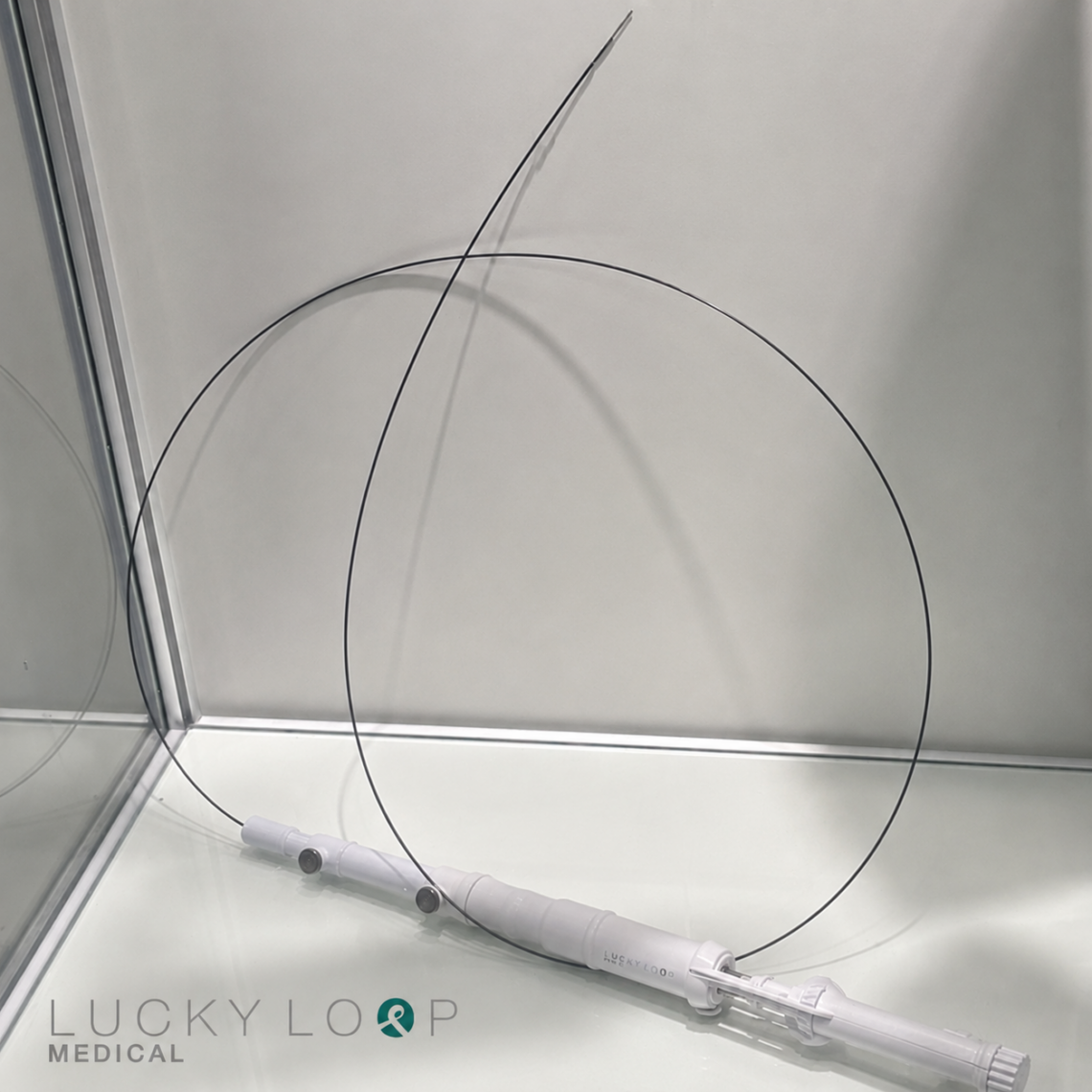
We have also secured patent protection in the United States, European Union, United Kingdom, Japan, and China. The company has established manufacturing and certification partnerships to support commercialization and scale-up. Nine hospitals across Sweden, Germany, Portugal, and the United States have expressed interest in participating in clinical testing, providing an important foundation for clinical adoption. In parallel, the company has engaged with five Fortune 500 MedTech companies, including one that has outlined a potential acquisition pathway following key clinical milestones.
A huge market opportunity
We estimate a total addressable market of approximately USD 22 billion across pancreatic, breast and liver cyst diagnostics. Pancreatic cysts alone represent a market opportunity of roughly USD 10 billion. Importantly, no dedicated brush-based diagnostic device for pancreatic cysts currently exists on the market, positioning Lucky Loop Medical in a category with limited direct competition. The company’s technology platform can also be adapted to additional applications, including breast, liver, thyroid, kidney and lymph node diagnostics, creating multiple future growth opportunities.
Advances in endoscopic diagnostics, increasing emphasis on early cancer detection, established reimbursement pathways, and growing strategic interest from major medical device companies are creating favorable conditions for innovation in this field. Because the Loop Brush integrates into existing clinical workflows and reimbursement structures, barriers to adoption are significantly lower than for many new medical technologies.
Join us as we move towards our next clinical milestone
Lucky Loop Medical has progressed from idea to patented, clinically validated technology with a defined regulatory pathway, manufacturing readiness, and demonstrated strategic interest from industry leaders. With the upcoming clinical program representing the next major value-inflection point, the company is positioned to advance a potentially transformative solution for pancreatic cancer prevention.