The Placebo Effect
“In our opinion the 5G Bioshield is nothing more than a £5 USB key with a sticker on it. Whether or not the sticker provides £300 pounds worth of quantum holographic catalyzer technology we’ll leave you to decide.
Phil Eveleigh, Pen Test Partners
You’ve heard of the placebo effect, surely? People who claim to get better just because they’re made to believe they’re being medically treated, when actually they’re given some coloured sugary water?
Well, silly as it may sound, it’s not “imaginary improvement”; it is a measurable, brain-mediated biological phenomenon that actually moves chemistry around the body, and actually improves the body’s condition. In other words: if you think you’re being treated, the body will trigger some self-healing mechanisms that really do stuff.
This is not metaphor. In controlled lab models of pain, placebo analgesia can be blocked by the opioid antagonist naloxone, meaning endogenous opioid systems actually get in motion when people believe they’re being treated. The modern synthesis is that the placebo effect is in fact many effects, rather than just one: expectation, learning, and therapeutic ritual can actually have a physical effect on nervous pathways, and these effects can be observed and quantified with neuroimaging and pharmacologic analysis.
In summary, our brain has the uncanny ability to heal the body. And how does society harvest this awesome power? The answer, as with so many other things in life, is “the indiscriminate use of lies”. Let’s pseudo-science!
Succussion
Homeopathy: remedies diluted to the point where there is statistically none of the original substance left.
Yes, literally zero: take, for example, one of the most popular remedies, Oscillococcinum for flu, with worldwide sales of around 200 million dollars. It’s so diluted that the universe would have to be 10^107 times bigger to make good the analogy “as diluted as a single atom in the entire universe”. That’s how diluted homeopathy is: it makes the universe look small and boring – how uncool is that?
The acting principle for homeopathic molecules, anyway, is not based on their presence, but rather in the memory they leave behind – just like an ex-boyfriend. The products go through a process of vigorous shaking and rattling called “succussion” that somehow increases potency by leaving some sort of imprint on the dilutant (water or ethanol, usually). A 2003 paper proved that ultra-dilutions of salts left different thermoluminescence curves in the water depending on whether the original substance was Lithium or Sodium, concluding that the atomic bonds of the water molecules had been modified differently depending on the original ultra-diluted salt. Sounds pretty amazing, except that this paper has been debunked as non-science: no-one has ever been capable of replicating the results, so… no science.
But however much you may enjoy mocking bad science and throwing exponential numbers around, it’s all irrelevant: homeopathy actually works. Yes, suck it up, it does!
For example, take the Reilly et al. 1986 randomized trial for hay fever, using a 30C dilution of pollens. That may well be 100 trillion times more diluted than a single molecule of pollen in the whole of Earth’s oceans, but patients who took the homeopathic remedy saw their symptoms improve by around 30–40%.
There are many other examples: a remedy for diarrhoea shows recovery in about 3 days instead of 5, another increases sleep time up to 30 minutes in insomniacs (about 50% or the effect of chemical drugs), a third reduces back pain by about 7 points (roughly 30% the effect of opiate analgesics). Who’s laughing now, huh?
Of course, there’s a trick: we’re comparing homeopathy to “no treatment”. Because if you compare it to placebo (people who are given plain water but told they are receiving treatment), all homeopathic remedies perform exactly alike: patients taking placebo improve just as much as recipients of homeopathy.
The mechanism that plausibly works here, in the absence of any credible physical effect, is a disguised placebo hullabaloo. Homeopathic consultations are typically 3 to 6 times longer than standard medical consultations, and very personalized, including relevant questions like:
• How do you react to weather changes (e.g., before a storm)?
• What are your hobbies or passions?
• How do you express your anger?
• Are you a 'chilly' person or a 'warm-blooded' person?
• Were you breastfed? If so, for how long?
Finally, the products are medical-looking, and the psychological power of “I am being treated” just does the rest. If you care to believe, homeopathy helps.
Just saying: prayer, rock’n’roll or the Holy Crystals of the Twelfth Alignment of Uranus do too, for that matter.

If adults can be conditioned to feel better by the appearance of medical authority, imagine kids – the poor things will just believe anything their mums and dads tell them, and, indeed, homeopathy has a much higher percentage of paediatric use than standard drugs. In France, arguably the most eager adopter of homeopathy in Europe, 30–50% of parents report giving it to their children, and up to 80% of users say they are satisfied with the results.
And while people are free to use whatever they want to make them feel better until their flu goes away by itself, a word of warning: placebo/homeopathy only works for soft symptoms - pain, insomnia, depression, fatigue, etc. In “hard” diseases, such as cancer, cardiovascular disease, neurological disorders, or bone fractures, the gig is up. When outcomes are measurable: “tumor regression”, “blood count”, “bone regeneration”), the homeopathy effect is consistently indistinguishable from zero. Don’t even try it.
Global Market: around 10 billion dollars
Subluxations
The statement “massaging your back can help with back pain” hardly deserves a Nobel Prize (well, perhaps a Nobel Peace Prize – they’ll give those to anyone). But how about “massaging your back can cure asthma and cancer”? Now that, if true, would deserve some attention. So… is it true?
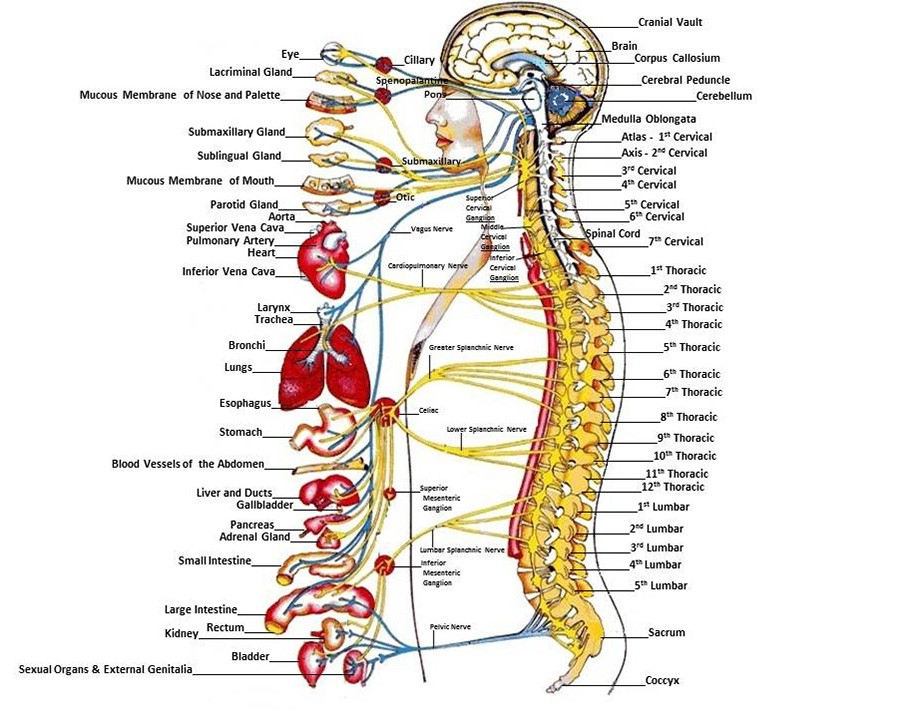
As a manual technique that makes your vertebrae go “crack”, chiropractic has a well-established track record in back pain, with results quite comparable to physiotherapy. But growing outside of its evident musculoskeletal niche, this technique has been gaily stretched into a full-blown metaphysical health system, with the theory that small misalignments in the spine (called “subluxations”) interfere with nerve signals between the brain and organs.
• Asthma? Lungs not properly “innervated”
• Gut problems? Digestive organs misregulated
• Immunity? Nervous system interference
Correcting them restores normal function, which is achieved by manipulating one or other set of vertebrae, and then explaining to patients that one or another set of nerves has thus been re-regulated.
Sounds dodgy? Well, it is. Subluxations are a construct with no discernible basis, which puts the concept roughly on par with the He-Man universe in terms of resistance to scientific scrutiny. But, like homeopathy, it does actually improve pain management… if you compare it to “no treatment”.
Official reviews of Spinal Manipulation Treatment outcomes show, for example, that patients experience a 10-20% improvement in pain sensation when compared to “no treatment”. When compared to a fake treatment (an actor massaging people’s backs at random) the improvement can be as low as 5%, below the threshold of Minimum Clinical Significance.
And, of course, clinical trials for chiropractic treatment of other indications (asthma, hypertension, or infections) have yielded predictable results: zero effect, or no better than placebo.
Anyway, chiropractic is used by roughly 200 million people annually across the world, including about 10% of adults in North America. It is reimbursed by Medicare and many private insurers in the USA, and integrated into mandatory health insurance in countries like Switzerland.
Global market: unclear, between 4 and 19 billion dollars
Meridians
Acupuncture is based on the idea that the body contains networks of meridians through which a vital energy, Qi, flows. Illness cheekily arises when this flow is disrupted, but by inserting needles at specific acupoints, practitioners restore this balance and normalize the function of organs and systems. And then there’s incense. That can’t hurt, can it?
This concept has been relentlessly trialed: an estimated 20,000 clinical trials have been done on acupuncture, which is just crazy – it’s far more than for immunotherapy, cardiovascular statins, antidepressants and non-steroid painkillers (ibuprofen, etc.) put together, for example. The results, on the other hand, have been fairly predictable: comparing proper oriental acupuncture to fake therapies (using sham needles, wrong points, retractable devices, allocation concealment, etc) prove that acupuncture works exactly like a placebo.
To wit: the numerical summary from the Vikers patient data meta-analysis (17,922 patients) across chronic pain conditions showed this:
• No treatment → pain 60/100
• Sham acupuncture → pain 45–50/100
• Real acupuncture → pain 42–47/100
The 2006 German acupuncture trials (GERAC) made the same point: at 6 months, in chronic low back pain, 48% of patients improved with acupuncture, compared to 27% with conventional care—a substantial benefit. But fake acupuncture achieved 44%, almost the same as real acupuncture. In practical terms, out of 100 patients, about 20 improve thanks to the context (illusion of treatment, relaxation, incense, etc.), and only 3 benefit from the specific effect of the needles.
The German health system, thus, knew that acupuncture worked, but also that an actor with a fake moustache randomly pinching the patient’s skin while playing Cafe Del Mar records achieved the same results. With that knowledge, they took the bold decision of reimbursing acupuncture for the indications of back pain and knee osteoarthritis.
A stupid decision? Not so much, actually: the standard treatment for back pain is, unfortunately, exercise. It’s boring, you sweat a lot, and you have to go to Decathlon to buy funny-looking sports clothes – as a consequence, around 60% of patients abandon treatment. But acupuncture, like chiropractic, needs only that people turn up, take their shirt off, shut up, and let someone give them a massage. In Germany, almost 90% of patients complete their treatment cycles. So… it may not do much good, but at least people stick to it.
Many other countries, including the US, Switzerland, UK or Italy, also offer public acupuncture in their healthcare systems, proving that governments are happy to embrace the placebo effect as long as it comes wrapped in something that the public want – a stunning 67% of Swiss people voted to include acupuncture in the public health system in a 2009 referendum. Enough said.
Global acupuncture market: circa 41 billion dollars
Quantum Holographic Catalysis
Have you been feeling heavy-headed, brain-foggy, demotivated? Excess of frantic energy? Low vibration levels, poor pineal gland activity? And all of this happens started happening around the COVID pandemic? If so, you may well be yet another victim of the global 5G conspiracy.
Not familiar with that? Although the exact sequence of events is a bit hard to follow, it seems that Bill Gates put 5G towers into the graphene and the COVID vaccine was used to amplify the… erm… I’m going to say cosmic rays? Anyway, around 2020 the world went crazy for theories of the sort (crazier than usual) and a whole new series of devices appeared: the 5G shields, designed to protect people from Bill Gates and its shady gang of Illuminati.
A fine example is the Bauer 5G Bioshield, a device marketed between 2020 and 2022; its makers claimed that "through a process of quantum oscillation, [it] balances and reharmonizes the disturbing frequencies arising from the electric fog induced by devices, such as laptops, cordless phones, wifi, tablets, etc.". This particular device, sold for about 350 euro, became famous because the product turned out to be a USB pen with a sticker.

While this may be utter hogwash, there is a surprising point for the Tinfoil Hat brigade here. The reality is that around 3–5% of the population report sensitivity to electromagnetic fields (EMF), with about 1–2% experiencing “significant impairment”. These individuals use healthcare services more frequently, miss work, impose burdens on their families, and they represent a very real cost of hundreds of millions of euros every year in the EU alone.
Unsurprisingly, 3 separate clinical trials between 2005 and 2007 established beyond any reasonable doubt that, as a disease, EMF sensitivity is 100% made up. Patients with EMF sensitivity were submitted, blindly, to both fake and real EMF fields, and their ability to detect the difference was zero. When told that they were under an EMF field, they reported 20-50% more symptoms, with or without an actual energy field.
So… can these utterly fake 5G protection devices help the healthcare system? Surprisingly, the answer is yes; sure, they can’t fix the underlying cause of this massive surge in mental health problems, but they can indeed help a few people feel less anxious. It’s a start!
Global EMF radiation protection shields market: estimated at 7.4 billion.
Lymphatic stagnation
Detox diets and cleanses are, perhaps, one of the most successful non-science medical narratives. They concept of “detoxification” is that modern life accumulates vaguely defined toxins in the body, leading to conditions such as lymphatic stagnation, liver congestion, build-up of mucoid plaque, intestinal sludge, systemic acidity, and adrenal fatigue.
Does this sound like “sanguine excess,” “putrefaction of humors,” or “melancholic disposition” to you? And damn well it should! Most terms used in detox have no physiological basis whatsoever, and are better understood as metaphors—a pattern they share with medieval medicine, religious texts and role-playing fantasy games.
The detox theory goes on to explain that a cleanse (juice, fasts, teas, supplements, castor oil massages, etc) can eliminate these toxins, whatever they are, and improve energy, skin, digestion, mood, libido, weight, and aura.
The truth, as you can expect, is that absolutely none of these detox products actually eliminate toxins from the body – the liver and the kidneys do that. From a purely scientific perspective, clinical trials have shown no effect beyond temporary weight loss, and short-term changes in microbiota composition. In other words, dieting makes you lose weight (mostly water and glycogen), and stopping eating junk improves your gut. Accompanying it with pseudo-medicinal theories on liver detox and toxin flows is a kind of harmless, neutral sideshow.
As for the many trials that support claims of detox effectiveness, the 2015 Klein & Kiat review of 20 published detox studies found that only 2 actually met the minimum criteria to call them “studies”, and even these had small sample populations and bad methodology, making them unacceptable as clinical evidence.
All in all, detox tends to mean calorie restriction, temporary abstinence from alcohol and ultra-processed foods, increased hydration, and exercise (along with spending 139 euro in a silymarin detoxifier, which only harms your wallet).
People could simply choose to improve their diet and do some exercise, but if some people need to be relieved of 139 euro and rub castor oil on their abdomen to start doing that, we should perhaps think of detox as a tax on the gullible.
Which isn’t actually that bad: an estimated 80% of Europeans and 90% of North Americans have poor diet or do no exercise whatsoever; if the whole detox blah-blah-blah can help reduce the almost 90 billion euro a year the EU spends on treating diabetes, cancer or cardiovascular disease attributed to obesity and lack of exercise, let’s have it.
Global detox market: 71 billion dollars
Wrapping it up
These five practices differ in aesthetics—sugar pellets, needles, popping joints, glowing stickers, green juice—but converge on the same neuropsychological leverage. Expectation is the headline mechanism: if you believe relief is coming, the brain shifts prediction and perception, and in domains like pain the downstream biology can include endogenous opioid signalling.
And let’s face it: humans need narrative to actually do things. Two thousand years ago, people needed to believe in a supernatural punishment to stop beheading their neighbours, and religions had their heyday as organisers of society. Today, lots of people like their science with a pinch of oriental spiritism or anti-establishment discourse to intervene in their health, either because they mistrust the system (understandably, too) or because they need a nice story to pay attention to minor things, like their life expectancy.
All in all, people being smart and responsible about their health would be better, but culture and self-responsibility don’t seem to be among the leading societal priorities at the moment – so we may have to take second-best: wrapping the placebo effect in a shroud of pseudo-scientific hocus-pocus, reaping its minor benefits, and be grateful we even have that.
Tune in to the future of Healthcare
Join our 20.000+ subscribers for the latest on Biotech investment & innovation


* What are you signing up for?
1 weekly mail with an article on surprising scientific advance and a (sometimes) witty article on innovation and investment.
1 weekly mail with updates on Capital Cell's investments in Healthcare startups.
This is not one of these "oh no, my email is all over the Internet" subscriptions. We will never, ever sell, send or cede your data to anyone else. Also, you can unsubscribe at any moment without us cheekly continue to send you mails - if you tell us to leave you alone, we will.