
Can an object travel faster than the speed of light? Can a cold body spontaneously transfer heat to a warmer one? The answer is more or less evident: no, it’s impossible. And not “very impossible”, like peace in the world and stuff like that: these are physically impossible. They are the walls of reality, the limits of existence.
Or are they? The impossible seems to change rather often, and yet the feeling of absolute certainty that scientists feel about their current set of reality limits is unshakeable.
And it’s OK for scientists to have a certain sense of security in what they know, but just how often has the scientifically impossible proven to be mere ignorance? We can’t tell for sure (415 times perhaps?), but let’s have a quick look at a few “so it wasn’t impossible after all... fancy that!” moments in the history of medicine.
A pumping heart
Back when people carried swords around, scientific dogmas were largely based on the deductive method, which consists of thinking about things and deducing what’s going on. This might be okay to explain some things – who killed Doctor Black, for example – but it falls a bit short of explaining vulcanism, genetics or electromagnetism.
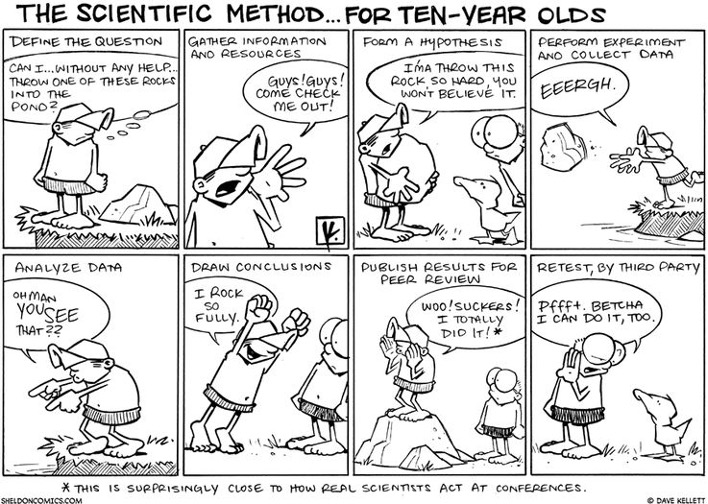
“The impossible” became a lot clearer once the scientific method was universally accepted. Regardless of whether you believe the world was created by the dreams and songs of ancestral giants, or that the earth is hollow and its interior is inhabited by ape-men and Nazis (https://legacy.geog.ucsb.edu/hollow-earth-with-holes-at-the-poles/), you do have to give the scientific method some credit: observe, conjure a hypothesis, experiment, reproduce results, accept a truth. It’s solid, and, unlike poetic creativity, it can be used to invent things like the toaster or Gore-Tex®.
Before the 16th century, the impossible was merely anything contrary to what most people randomly believed. And so, for over a millennium, suggesting that blood is recirculated in the body was about as ludicrous as suggesting time travel because Galen, a roman scholar who died in 216, had described a system where blood, one of the four humors of the body, was endlessly created in the liver and consumed by the organs. And that was it.
It did take a millennium before Ibn al-Nafis, a physician from Damascus, dissected human hearts and boldly concluded that no, blood cannot pass through the solid ventricular wall, which was one of the cornerstones of Galen’s theory. Instead, he wrote, it must go from the right ventricle to the lungs, then to the left ventricle via the pulmonary artery and vein. This correct description of pulmonary circulation – in 1242 AD – had no impact whatsoever in science anywhere, because, as everyone knew, that was simply impossible: blood was consumed and not recirculated, a little like today’s belief that oxygen is not recirculated but rather endlessly consumed (a belief that seems to hold scrutiny).
The Spanish scholar Michael Servetus rediscovered pulmonary circulation in 1553, but, unfortunately, he published his findings in the same book in which he criticized contemporary theology, which won him being burned at the stake alongside his book.
William Harvey, an English physician educated in Padua, was finally the “official” discoverer of blood circulation. His careful experiments and calculations proved that blood circulates in one continuous circuit, and he had the good sense of publishing his findings without further political commentary.
His findings sparked furious reactions from scientists angry that another scientist had conducted scientific experiments to disprove the 1500-years-old unproven writings of a guy with a toga. But that was mere noise: the weight of Harvey’s evidence, plus the fact that experiments were beginning to be considered more important than prose, plus the complementary findings of Marcello Malpighi (who discovered capillaries in 1661, the final missing piece in the complete circulatory puzzle), finally convinced science that blood circulation was not impossible – quite the opposite.
Oddly, this discovery almost coincided with the acceptance of another shocking new truth: Earth orbited the sun, not the other way around. Ah, the 17th century! What a rollercoaster for the curious minds!
Different bloods
Under the microscope, all blood looks alike. By 1900, suggesting that invisible differences in people’s bloods could kill was as mystical and absurd as... well, hard to tell really; medicine was rather exotic back then. Radium injections were prescribed to increase vitality, cranial measurements were used to diagnose “degeneracy”, cow’s milk was transfused to Cholera patients, and Bayer Pharmaceutical pioneered the sale of heroin to kids - decades before the Sinaloa Cartel.

These and others fanciful theories may have been mainstream in 1850, but the existence of different bloods between human individuals was known to be impossible. Blood transfusions were performed, but they were done at random - quite the gamble, since the odds of a blood type match between two random individuals is about 55%, and the odds of dying from a wrong blood transfusion are north of 80% unless the patient receives immediate treatment with modern medical methods.
Since the blood was "just blood", surgeons even transfused it from animals (sheep, calves). Recipients often died, but doctors interpreted this as a consequence of the patient's "weak constitution" rather than a "supposed" incompatibility.
Failing to understand why transfusions could save or kill patients, medical authorities banned them in the 17th century, and a timid recovery in the 19th century ended when the Paris Academy of Medicine concluded, in 1835, that transfusions were simply too dangerous.
Some progress came in 1875 when Leonard Landois, a German physiologist, paid attention to what happened when mixing blood cells of an animal species with serum of another. The result was evident: something in one animal’s blood destroyed the cells of the other. Landois had discovered agglutination and hemolysis, the immune reaction at the heart of transfusion incompatibility, and warned that human blood might have similar incompatibilities between individuals. His work was largely accepted by scientist (it influenced Nobel Prize winners like Landsteiner or Ehrlich), but utterly ignored by clinicians, whose reality continued to be that blood transfusions were impossible. Medicine remained paralytical.
It was not until 1902 that Karl Landsteiner finally made sense of it all. Systematic study of mixing different people’s bloods, plus a pinch of modern microscopy and probability math, finally gave light to the A/B/0 grouping we know and cherish - and half of modern medicine with it (trauma care, modern surgery, organ transplantation, blood banks…).
Landsteiner won a Nobel Prize and everlasting fame, but people like Landois never quite got their due. Oh well! Sometimes you win, sometimes a whole life of effort and struggle simply slips into eternal oblivion.
Electrical nerves
This car here, the Rimac Nevera, (yes, “fridge” in Spanish) isn’t just horrible, stupidly expensive and utterly unnecessary: it’s also a road-legal car that is actually faster than any nervous signal.

Since you probably know that nerve signals are electric impulses, that may strike you as odd; electricity tends to be faster than cars, right? But nervous transmission isn’t like electric cable conduction. Instead, nerves are a mind-blowingly beautiful system of “leaping” electrochemistry that can transmit signals at a top speed of about 430 km/h.
Anyway, you knew that nerves transmit electric signals, which wouldn’t be the case if you were reading this blog in the 18th century. Nerves were known since ancient times, of course, but they were a biological conduit like veins or intestines, and, as such, were supposed to transmit a fluid - precisely, a vital fluid by the stupendous name of Spiritus Animalis.
In 1791, Luigi Galvaniobserved that touching a dead frog’s leg with metal rods made it twitch, and deduced that living animals could create, store and use electricity. That seemed fine to him, but to the rest of the world the presence of self-generated electricity in an organism was a physical impossibility. Another famous Italian electrical pioneer, Alessandro Volta, became a stern opposer of Galvani’s work, and their bitter clashes became legendary.
In fairness, Galvani had little idea of what was going on, and Volta was mostly right – the frog’s electricity had been created chemically by the metal rods; to prove his point, he went and invented the chemical battery, no less. Galvani, of course, was partly right: the body used electricity to tell the muscles to move. He had little idea how, and most of his public demonstrations revolved around making ox’s heads and executed criminals twitch under electrical currents. These gruesome spectacles did little to further the true understanding of bioelectricity, but they managed to spark some life into the idea that “something electric was going on” in the body.
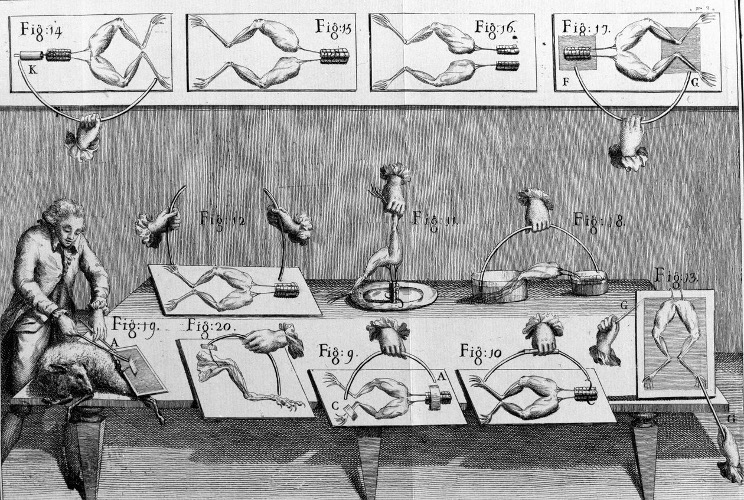
Galvani never saw the triumph of his ideas, but, ironically, the key findings of scientists such as the German physician Emil du Bois-Reymond that eventually proved the electrical nature of the nervous system, circa 1840, were only possible thanks to a more modern and precise machine for measuring electricity: the galvanometer, a machine not invented by Galvani, but indeed named in his honor.
Du Bois-Reymond proved beyond doubt that nerves used electricity, and although understanding its true nature (the ionic action potential) took another 100 years, doctors were already performing electrocardiograms by the late 19th century.
And, thus, another "impossible" thing became a gigantic business.
Hidden signals
Once a truth is proven, it becomes dogma almost instantly. The electrical nature of the nervous system, for example, went from impossible to absolute in the space of 50 years, and, by the dawn of the 20th century, electrical impulses were supposed to control every action in the body, from muscle movement to digestive secretions. The body had gone from being a bag of humors and spirit fluids to a machine hardwired by electrical cables.
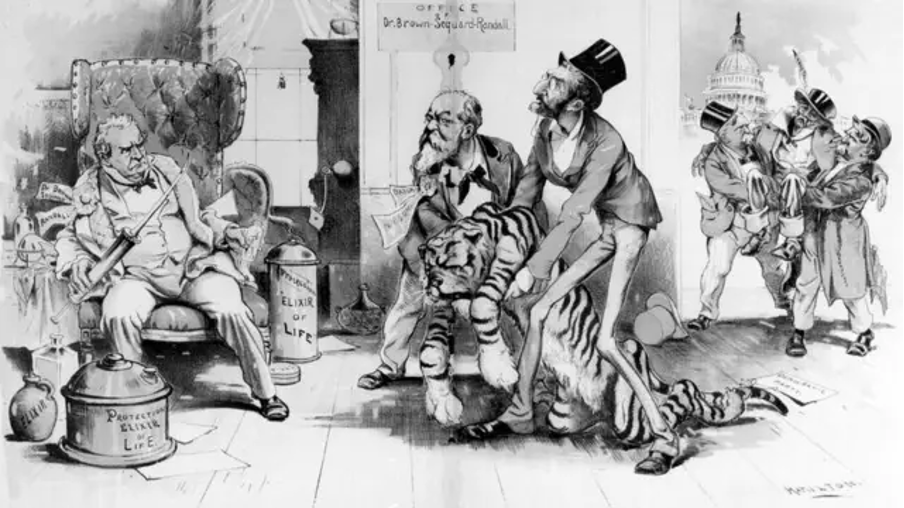
The concept of chemical organic communication went the way of the dodo rather rapidly, quickly becoming associated with snake-oil vendors and charlatans. An early proponent of the idea of Endocrinology was the eminent physiologist Charles Brown-Séquard, who published an article in The Lancet in 1889 arguing that, since “the mind and body of men are affected sexual abuse and masturbation” or by castration, sexual organs must contain chemical entities that invigorate and rejuvenate the body.
Said and done - Brow-Séquard injected himself with crushed animal testicles, claiming immediate rejuvenating effects, and thousands of other men (zero women) followed suit. His “Elixir of Life”, never corroborated by a single serious experiment, became a punchline for the scientific community. The episode further discredited the concept of internal secretions, now downgraded from “impossible” to “laughable”.
The orthodox view, advocated by the great Russian physiologist Ivan Pavlov, was that things like pancreatic secretion were completely controlled by nerves. But in 1902 William Bayliss and Ernest Starling carried out a series of elegant experiments that were very difficult to refute.
First, they severed every nerve reaching the pancreas of a dog and observed that squirting acid into the intestine still caused the pancreas to secrete its juice. In the absence of nerves, intestine and pancreas must have communicated somehow. Furthermore, pieces of that intestine were ground up, filtered, and injected in another dog’s bloodstream; even without food, the pancreas started secreting straight away. There could be very little doubt: the pancreas was responding to a chemical messenger.
They had stumbled upon secretine, the first hormone ever discovered, and the weight of their evidence quickly became crushing. Pavlov himself, the pope of “nervism”, was so opposed to the idea that he had his students replicate the Bayliss-Starling experiments to find flaws that would discredit them… but his findings corroborated the hormone theory, and even he had to admit that what physiology had thought impossible was, in fact, the truth.
The discovery of hormones has given us insulin, adrenaline injections, In Vitro Fertilization, and yadda-yadda-yadda. But what you really want to know, surely, is “can I actually rejuvenate myself with crushed bull’s testicles?”. Not really, but you can inject testosterone in your body and see what happens. But, in fact, testicles produce but don’t store hormones; in order to receive any significant amount of testosterone you would need to crush a quarter of a ton of bull’s testicles – which requires, approximately, some 200 bulls.
Which seems way, way too many testicles for the result.
New neurons
Here’s an impossibility you probably agree with: neurons do not regenerate. A broken leg or a gash heal over time, brain damage or spinal injuries do not.
In 1928, the Nobel Prize-winning Spanish neuroscientist Santiago Ramón y Cajal, the man who mapped the synaptic web of the brain, was blunt: “In the adult centers the nerve paths are something fixed, ended, immutable. Everything must die, nothing may be regenerated.”
But, in the 1960s and 1970s, the work of Joseph Altman and, later, Michael Kaplan (MIT), brought the first solid evidence that rats and primates generated new cells in the hippocampus and the olfactory bulb, and suggested these might be new neurons. Since this was known to be impossible, their work was dismissed or ignored – apparently, Kaplan was told by a senior colleague to focus on something “more believable” if he “wanted a job”.
The next key findings that shook this impossibility came from two extremely cool experiments:
- Singing canaries. Fernando Nottebohm of Rockefeller University proved beyond reasonable doubt that, each spring, when canaries learn new songs, they create new neurons to help store them.
- Nuclear bomb fallout.Between 1950 and 1990, about 1,500 nuclear bombs were detonated on earth, and each of these explosions released vast amounts of Carbon-14, a tracer element used abundantly in Archaeology. In 1998, a Swedish team led by Peter Eriksson and Fred Gage measured C-14 in hippocampal cells of people born at different times, and proved that some neurons were born after the person – meaning during adulthood).
Other pieces of faint evidence kept suggesting that the “impossible” wasn’t so impossible after all: adult brains could sprout new neurons, particularly in the hippocampus (important for memory) and the olfactory bulb (for smell). What’s more: lifestyle seemed to affect this, with running and diet apparently boosting neurogenesis. And by “apparently” we mean “no evidence whatsoever”, which logically sparked an avalanche of neurogenetic diets, health gurus, influencers and TED Talks to regrow your brain cells, all of them with the scientific rigor of a Flash Gordon movie.
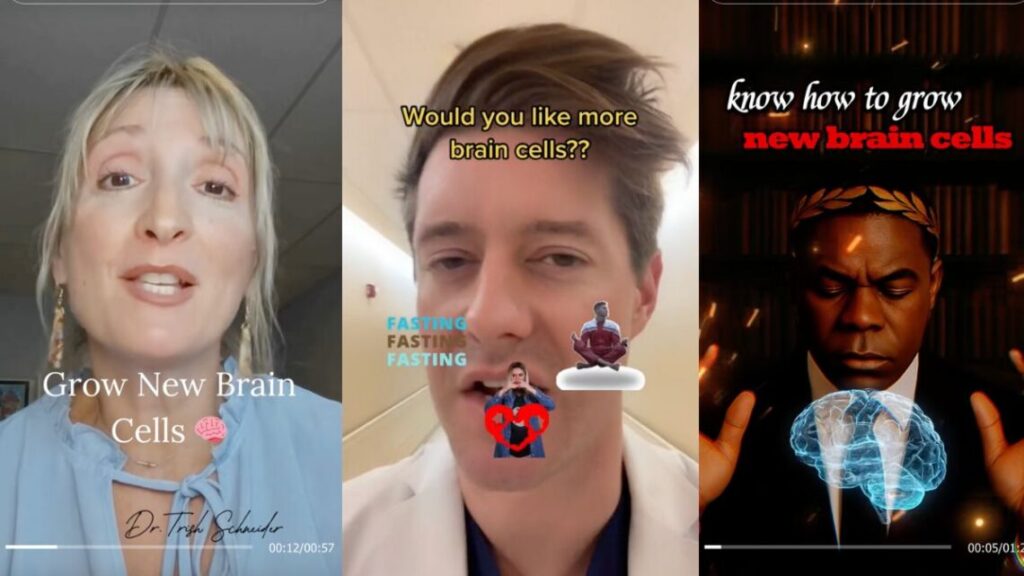
Dismantling this particular “impossible” is, actually, still a work-in-progress. A rather solid 2018 study found that adult neurogenesis in the hippocampus is extremely rare, if it exists at all, and the controversy goes on and on (you can read about it in this short and clear article on The Atlantic: https://www.theatlantic.com/science/archive/2018/03/do-adult-brains-make-new-neurons-a-contentious-new-study-says-no/555026/).
Repairing damaged brains and spines could become a reality at some point, and its aura of impossibility already has several cracks in it. Let's give it another 65 years and see what happens, shall we?
Plenty more
There are many other disproved truths in medicine: viruses can transmit cancer, there are lymph nodes in the brain, the appendix is not just a vestigial organ, the heart is an endocrine organ... and many, many more.
This historical trend of constantly accepting wrong ideas seems nothing short of deliberate stupidity, but who can blame us? Reality is ludicrously complicated, and unveiling the mysteries of the universe is not that easy. Neurogenesis, for example, has been in the path to disproving for over 65 years, and we still have little idea whether we can actually grow brain cells.
Things are slow, complicated and... well, maybe someday we'll get somewhere.
Stem af op de toekomst van gezondheid
Sluit u aan bij onze meer dan 20.000 abonnees voor het laatste nieuws over biotechinvesteringen en -innovatie.


* Wat accepteert u?
1 wekelijkse mailing met een artikel over verrassende wetenschappelijke doorbraken en een (soms) geestig artikel over innovatie en investeringen.
1 wekelijkse e-mail met updates over Capital Cell investeringen in nieuwe bedrijven in de gezondheidssector.
Dit is niet een van die "oh nee, mijn e-mail staat op het internet" abonnementen. We zullen uw gegevens nooit en te nimmer verkopen, doorsturen of overdragen aan iemand anders. Bovendien kunt u zich op elk moment uitschrijven zonder dat we u schaamteloos blijven e-mailen; als u ons vraagt om u met rust te laten, doen we dat.